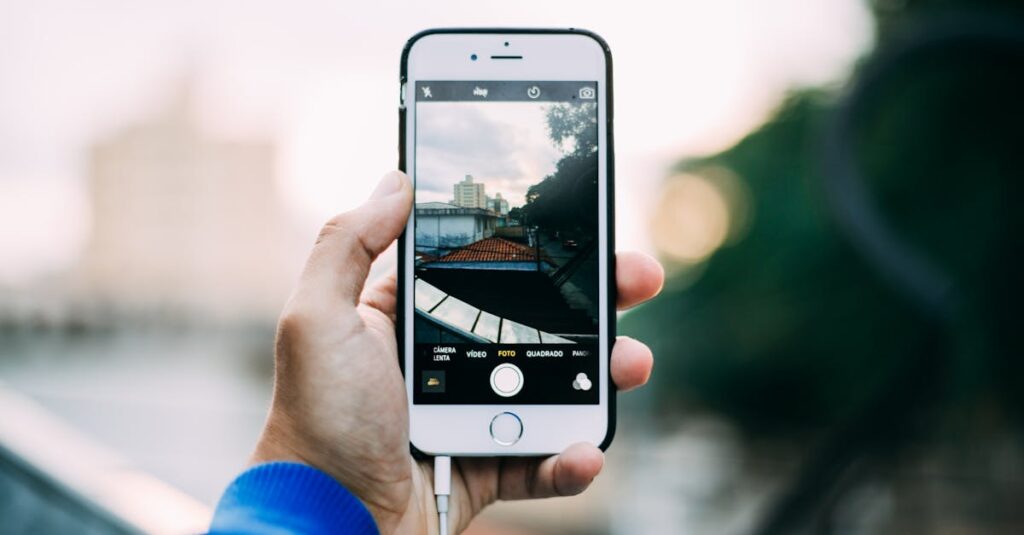
Ever looked up at the night sky and thought, “Wow, that moon would make a great Instagram post!”? You’re not alone. Many smartphone enthusiasts dream of capturing that glowing orb in all its glory, but it often ends up looking like a distant speck instead of a celestial marvel. Fear not, aspiring astrophotographer! With just a few simple tips, your iPhone can transform into a moon-catching machine.
Table of Contents
ToggleUnderstanding Moon Photography
Capturing the moon can be a rewarding experience for photographers of all levels. With the right techniques and tools, anyone can produce impressive shots of the night sky.
Why Photograph the Moon?
Photographing the moon offers several benefits. First, it serves as a fantastic way to improve photography skills. Practicing night photography enhances understanding of lighting and exposure. The moon’s detail provides a unique subject that captivates viewers. It’s also an opportunity to connect with nature and appreciate astronomical beauty. Additionally, sharing stunning lunar images on social media can inspire others to explore photography.
Equipment Considerations
Selecting the right equipment is crucial for successful moon photography. A tripod helps stabilize the iPhone, reducing blurriness caused by shaky hands. Using a telephoto lens allows for closer shots, revealing intricate lunar details. An optional app with manual controls can enhance photo adjustments, such as shutter speed and ISO. Experimenting with external lenses may yield better results, as they can improve image quality. Lastly, ensure that the iPhone’s battery is fully charged for extended shooting sessions, especially during nighttime explorations.
Preparing for the Shoot
Preparation significantly influences the quality of moon photography. Following the right steps ensures clear, vibrant images.
Choosing the Right Time
Timing plays a crucial role in lunar photography. Full moons provide maximum brightness, making details more visible. Opt for evenings just after sunset when the sky is darker. Capturing the waxing gibbous phase also offers striking silhouettes of the moon against a colored sky. Avoid cloudy nights; they obstruct the moon and hinder photo quality. Check local weather forecasts and lunar calendars for the best opportunities.
Finding the Best Location
Selecting an ideal shooting location enhances image quality. Look for areas with minimal light pollution to avoid washed-out images. Elevated viewpoints or open fields provide unobstructed views of the sky. Natural surroundings can add depth to photos, creating dynamic compositions. Research local parks, hills, or lakes that highlight the moon’s beauty. Aim for locations away from city lights, ensuring a clearer shot of the moon against a dark backdrop.
Camera Settings for iPhone
Optimizing camera settings on an iPhone enhances the photography experience while capturing the moon. Key adjustments make a significant difference in image quality.
Adjusting Exposure and Focus
Adjusting exposure and focus directly impacts moon photography. Start by tapping on the moon in the camera viewfinder to lock focus. Manually modifying exposure might be necessary to prevent overexposure, given the bright surface of the moon. Swiping up or down on the screen adjusts the exposure slider. A lower exposure setting, around -1.0 to -2.0, often produces the best results, revealing intricate details without losing clarity. Avoid relying solely on automatic settings. Instead, take control of focus and exposure for well-defined and striking images.
Utilizing Night Mode
Utilizing Night Mode optimizes low-light photography on iPhones. Automatic activation occurs in dim environments, enhancing image detail and reducing noise. Night Mode operates best when the camera remains steady. A tripod or stable surface provides improved results. Captures should last about 3 to 10 seconds, depending on the ambient light and the effect desired. Experiment with adjusting the exposure time before taking the shot. Users should check the Night Mode icon in the camera app for confirmation that it’s activated. This mode dramatically enhances clarity, making it an essential tool for photographing the moon.
Helpful Techniques
Enhancing moon photography on an iPhone involves utilizing various techniques. Below are effective strategies to capture stunning images of the moon.
Using Zoom Effectively
Using digital zoom on the iPhone can result in lower image quality. Instead, opt for optical zoom provided by external lenses. A telephoto lens boosts detail, enabling clearer, sharper images. Utilizing a tripod maintains stability, especially when zoomed in. Maintaining focus on the moon requires tapping on it in the viewfinder before adjusting zoom levels. Experimenting with different angles offers diverse perspectives and enriches the final shot.
Leveraging Third-Party Apps
Leveraging third-party apps expands the capabilities of an iPhone camera. Applications such as ProCam or Halide provide manual controls for better exposure and focus. These apps allow users to fine-tune settings, such as ISO and shutter speed, enhancing night photography. Utilizing these tools makes it easier to capture intricate details of the moon without losing quality. Shooting in RAW format increases editing flexibility, preserving more information in images. These apps can transform ordinary moon shots into extraordinary photographs, showcasing the beauty of the night sky.
Post-Processing Tips
Editing can significantly enhance moon photographs captured on an iPhone. Adjust brightness and contrast to bring out the moon’s details effectively. Use apps like Snapseed or Lightroom to apply filters and fine-tune sharpness. Cropping makes composition more appealing, while selective editing tools highlight specific areas, drawing attention to the moon against the night sky. Noise reduction features smooth out any graininess, especially in low-light conditions. Custom presets can streamline the editing process for consistency across images.
Sharing moon shots invites others to appreciate your work. Choose platforms like Instagram or Flickr, which cater to photography enthusiasts. Engaging captions can describe your photography experience and encourage interaction. Utilizing appropriate hashtags increases visibility and connects images with broader audiences. Consider joining photography groups or forums to receive constructive feedback and share techniques. This sense of community enriches the photography journey, inspiring others and deepening your passion for capturing the moon.
Capturing the moon with an iPhone can transform an ordinary night into a memorable photographic adventure. With the right techniques and tools in hand, anyone can achieve stunning results that showcase the moon’s beauty. By focusing on essential aspects like equipment selection, optimal timing, and camera settings, photographers can elevate their skills and create breathtaking images.
Post-processing further enhances these shots, allowing for creative expression and refinement. Sharing these captures on social media not only showcases talent but also connects photographers with a broader community. Embracing the challenge of moon photography can lead to rewarding experiences and inspire a deeper appreciation for the night sky.